
Collaborative Educational Toy
This semester long project was completed as part of a multidisciplinary team consisting of graphic design, education, and mechanical engineering students. I served as the lead graphic designer and project coordinator for my group, which included three education majors and three mechanical engineering students.
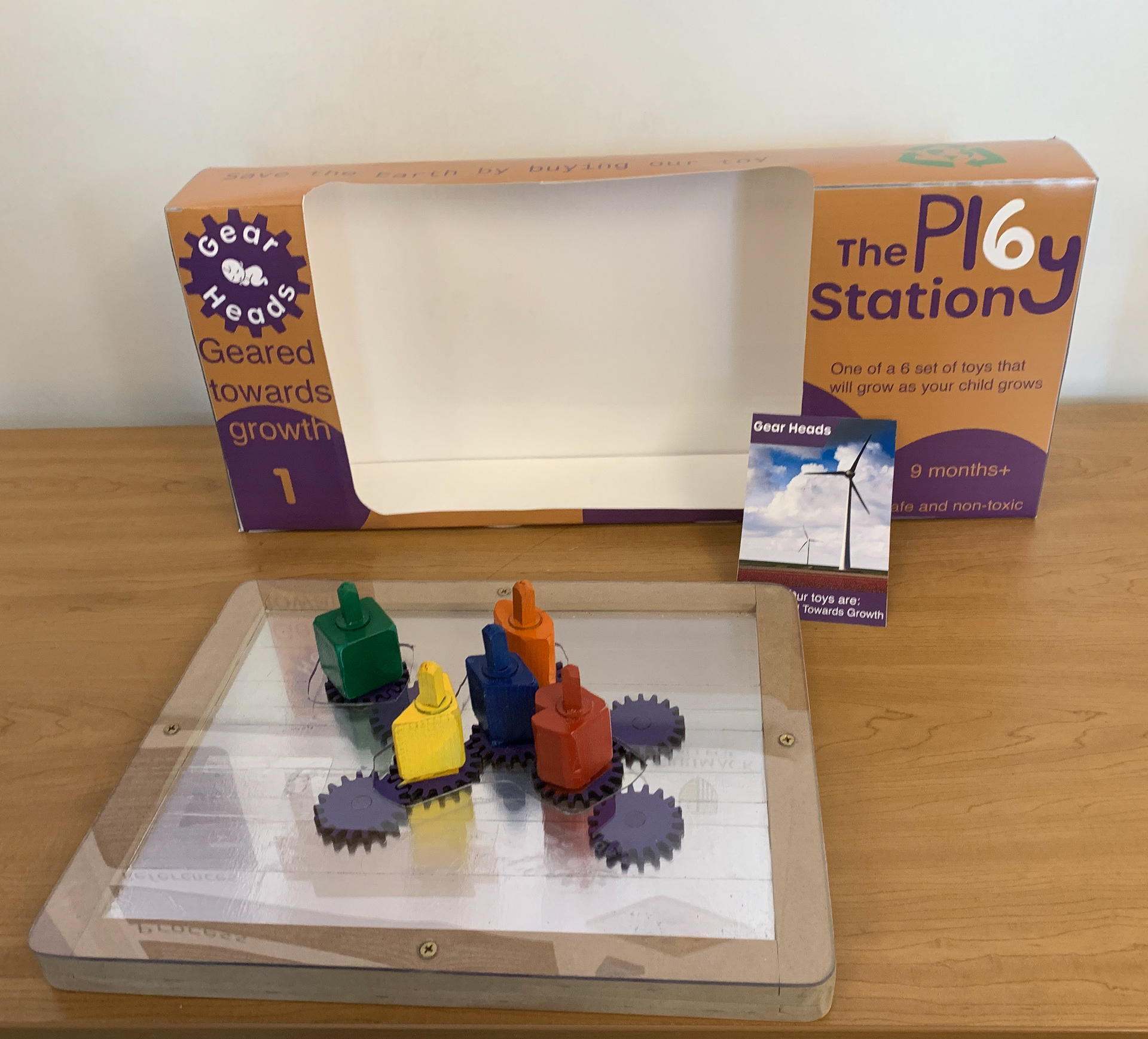
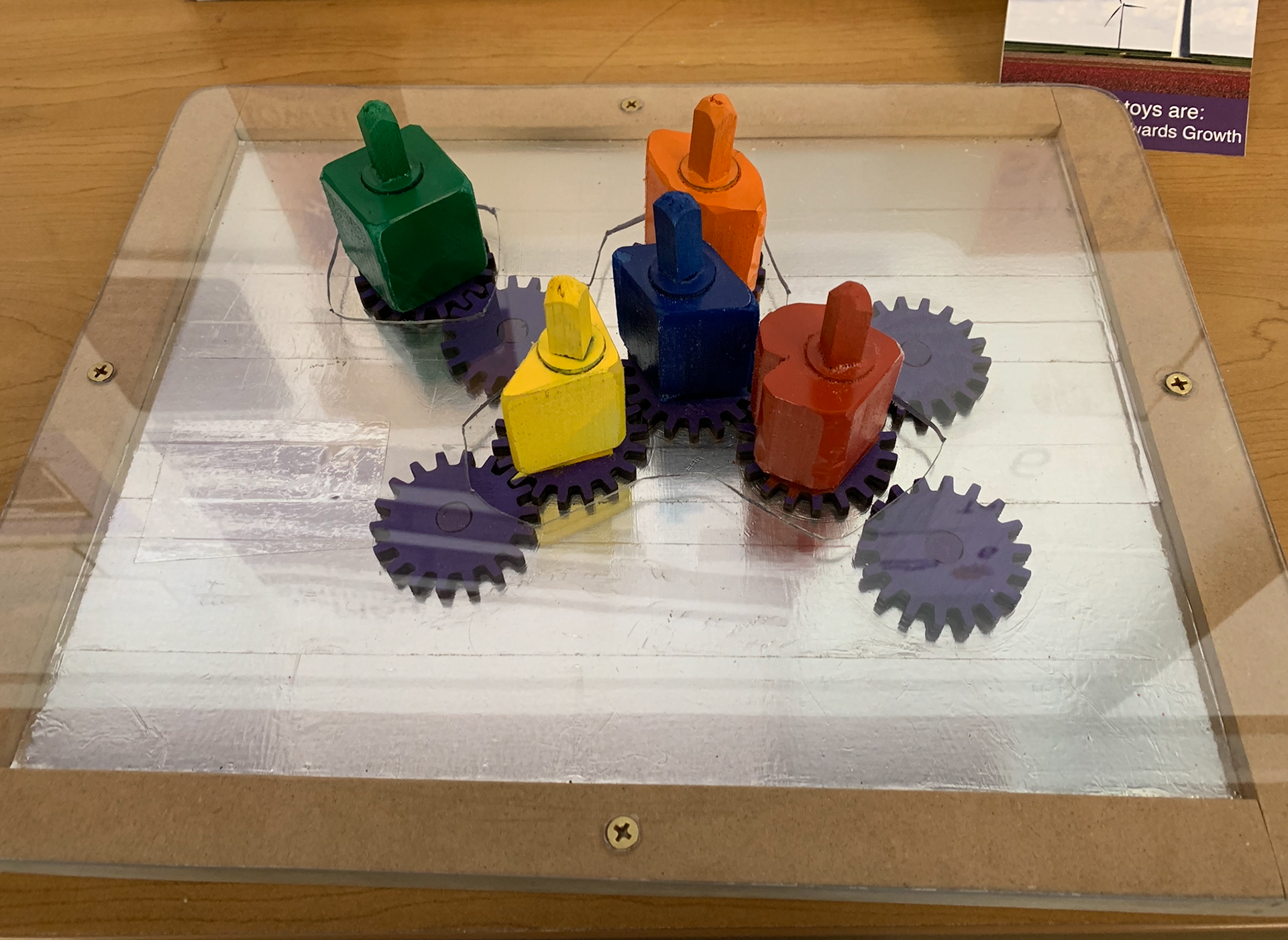
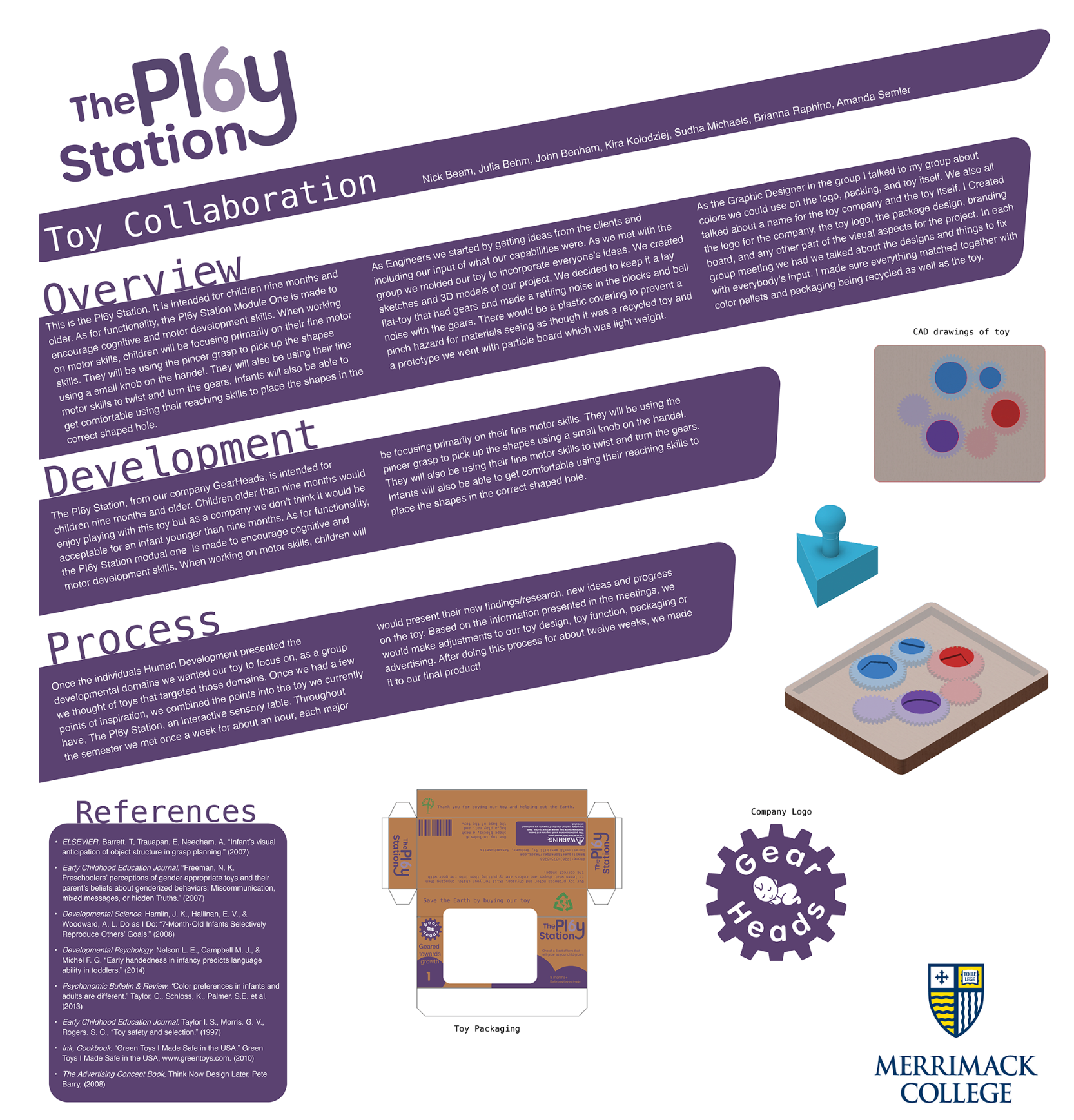
The objective of the project was to develop a toy company and educational product tailored to a specific child age range. Our team focused on infants aged 9 months and older, resulting in the creation of a company called Gearheads. We designed a modular toy system titled PlayStation, beginning with the first developmental stage intended for 9-month-old children. Each subsequent toy in the series is designed to build upon previously learned skills, allowing for continued cognitive and motor development over time.
The initial toy introduces foundational learning concepts such as shapes and colors. Each shape functions as a tactile block that produces sound, ensuring engagement even when used independently. This multisensory approach supports early childhood learning through play, encouraging exploration and interaction.
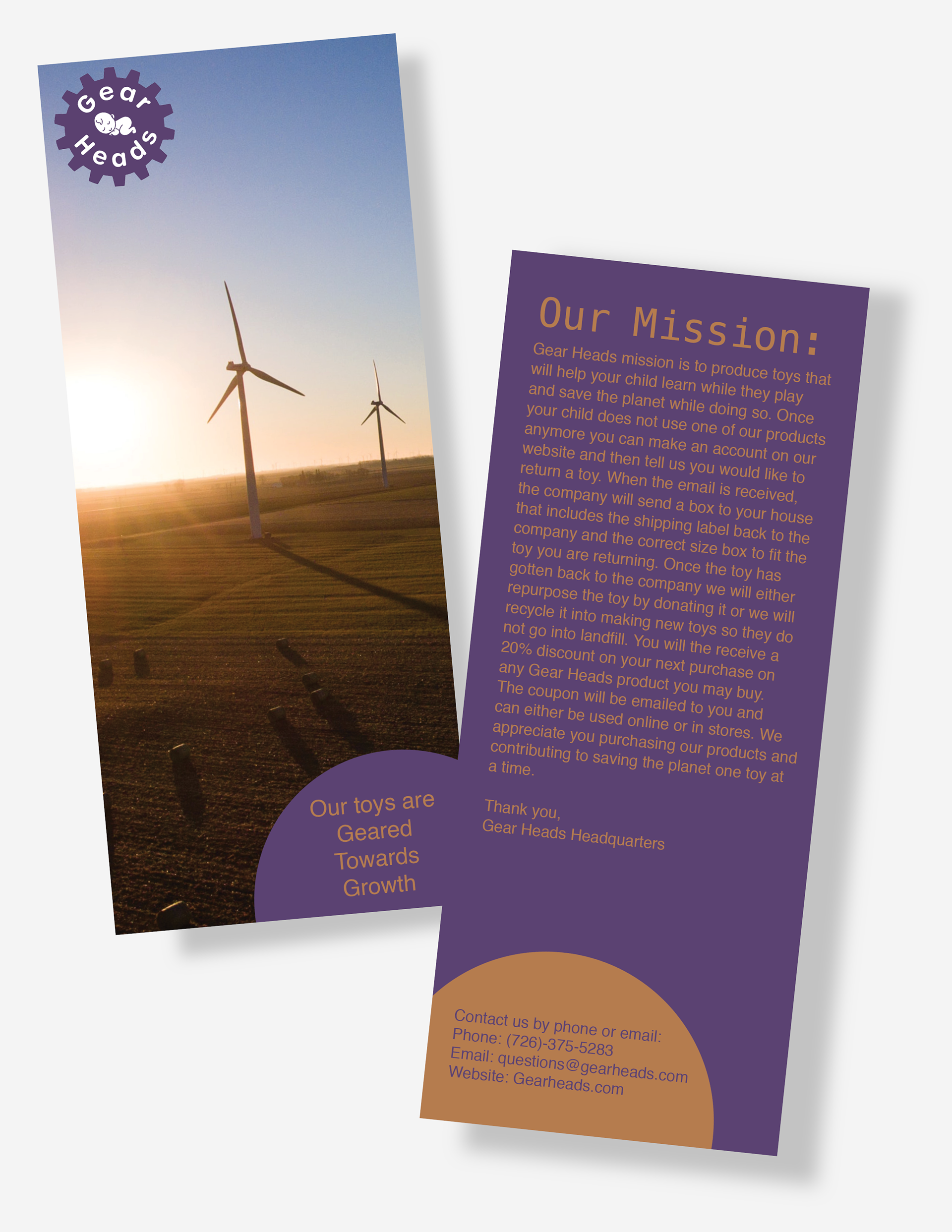
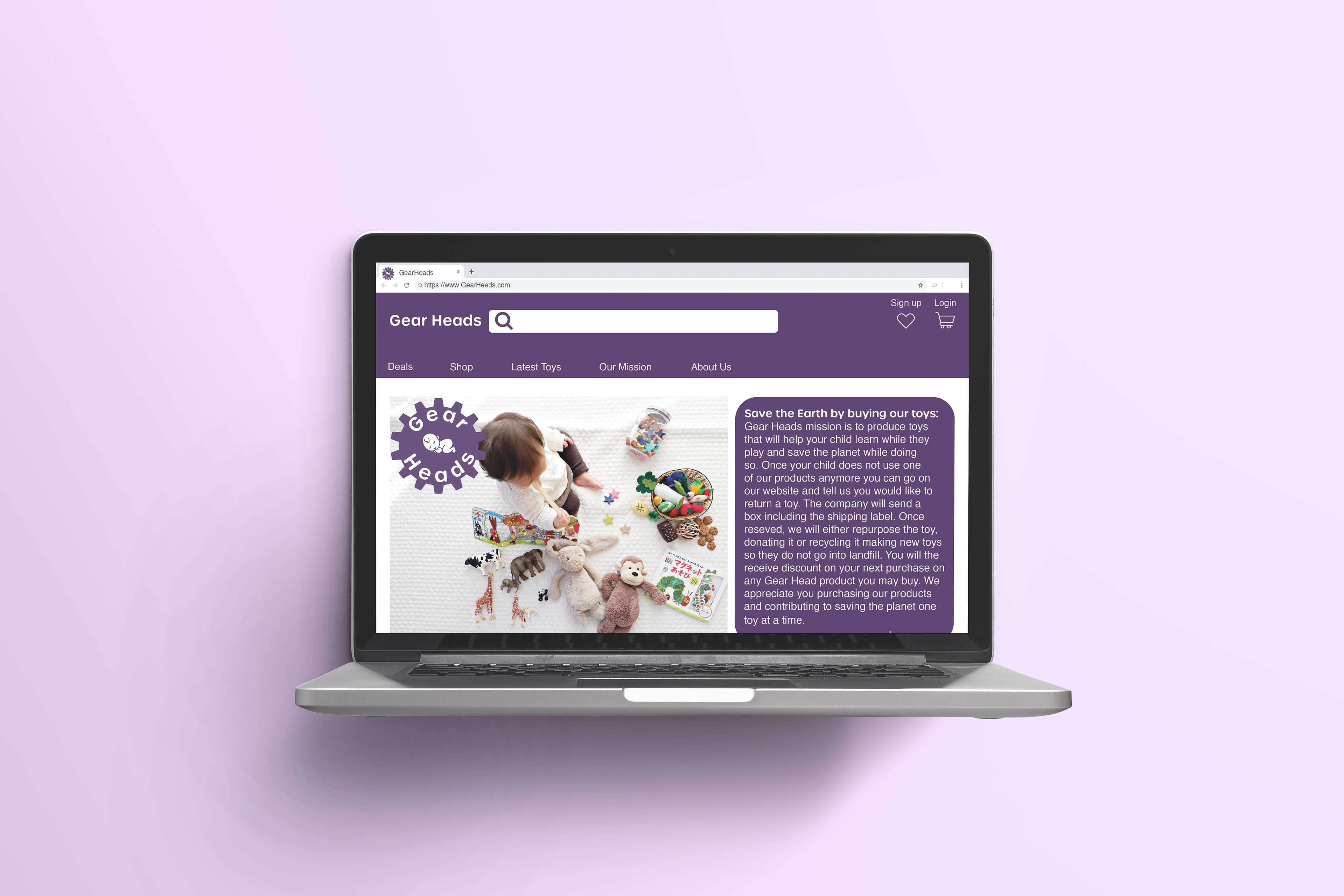
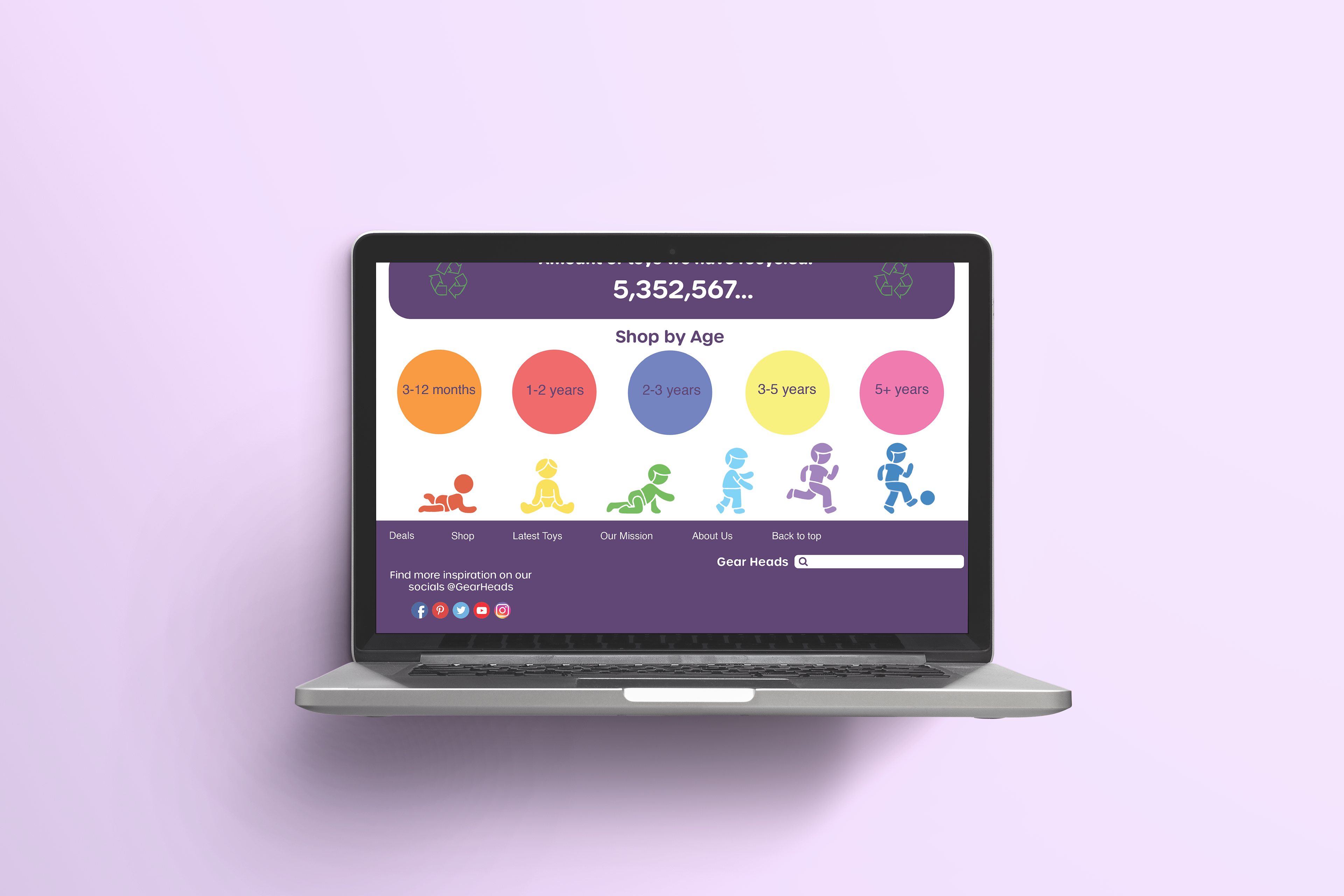
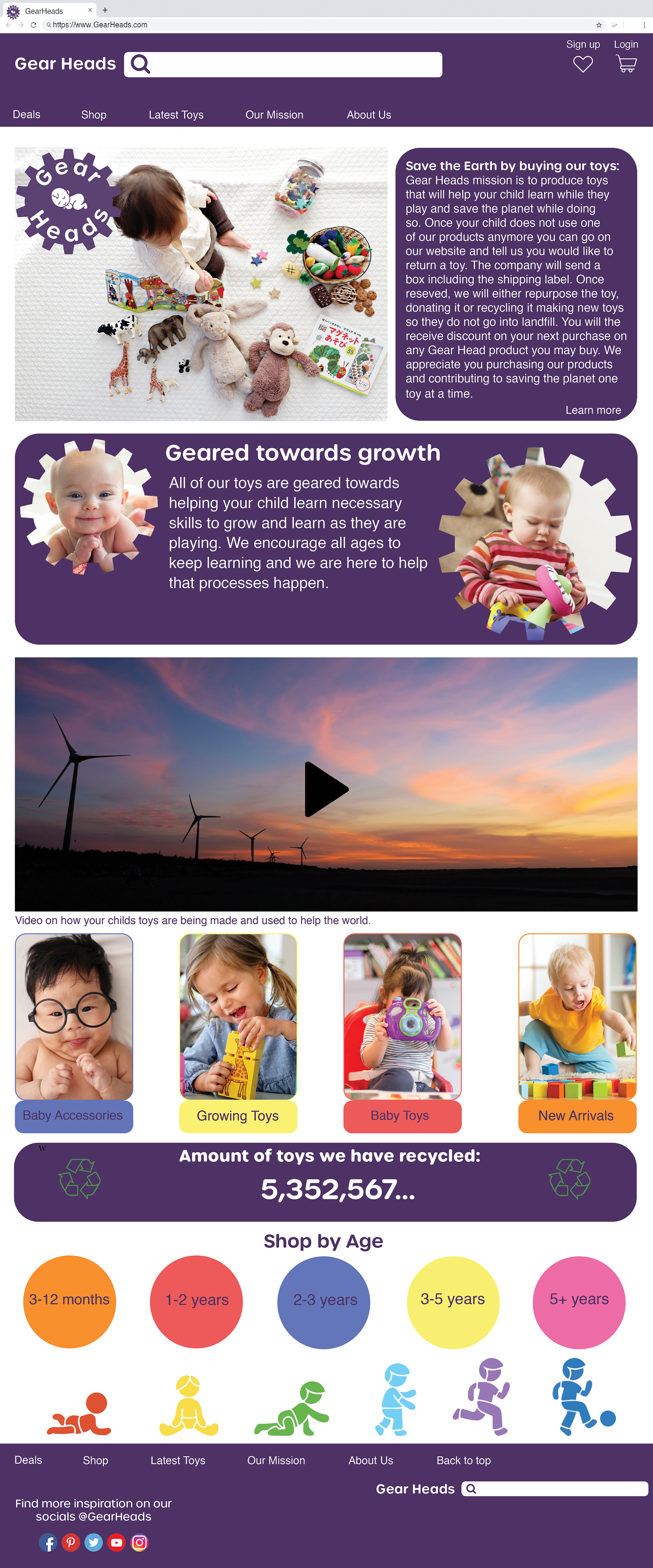
Sustainability was also a key focus of the project. Gearheads was developed as an environmentally conscious brand, incorporating recycled materials into both toy production and packaging design.
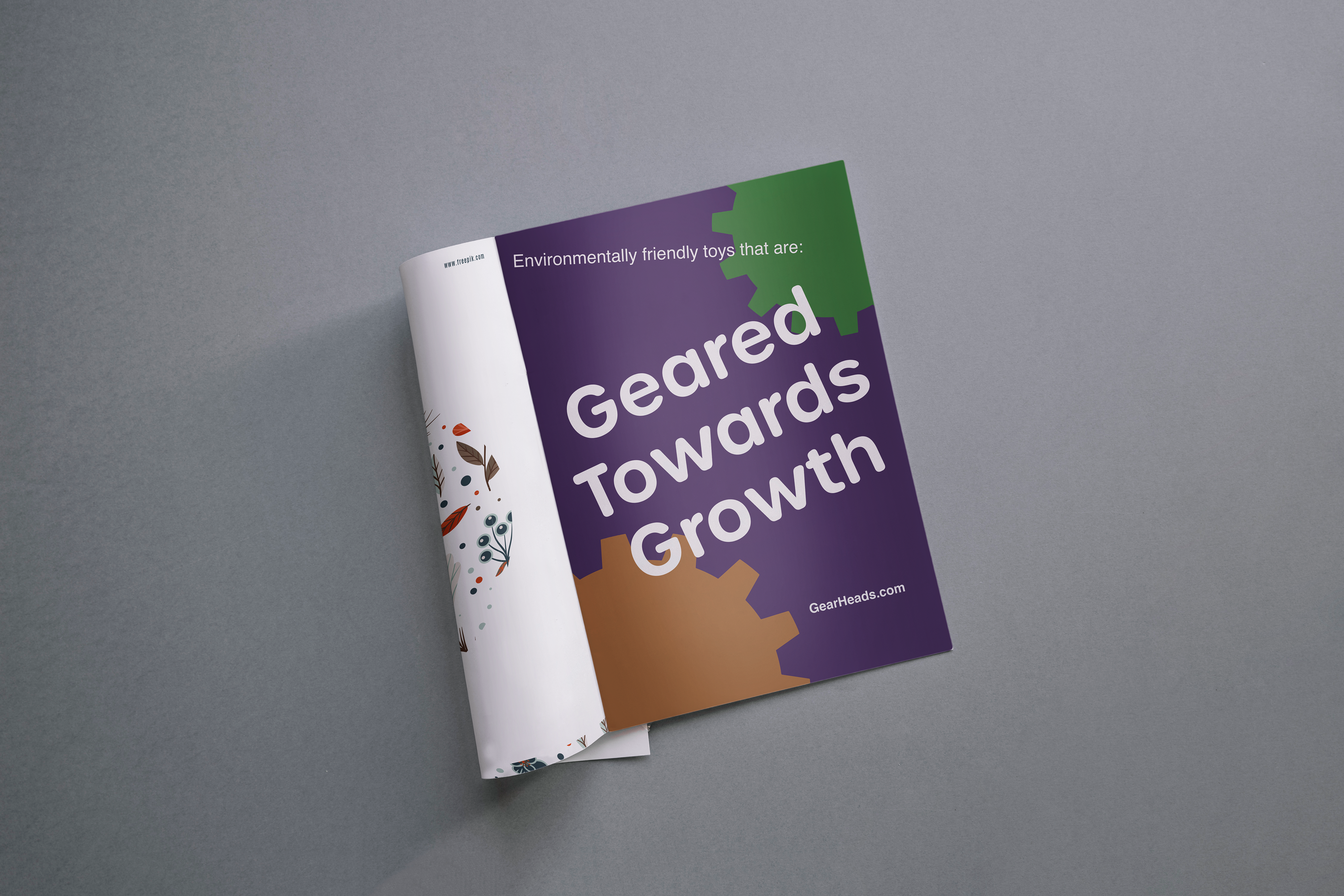
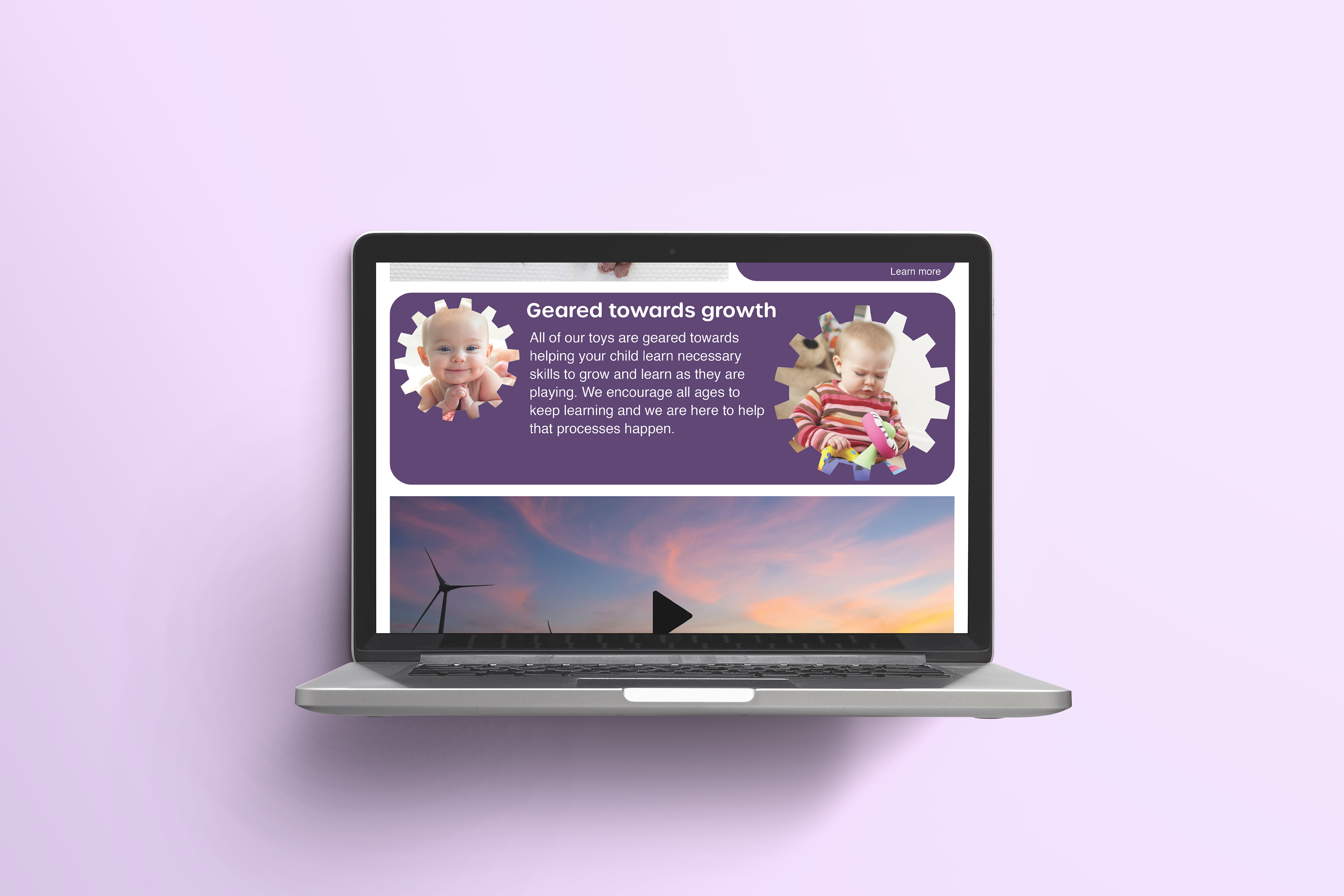
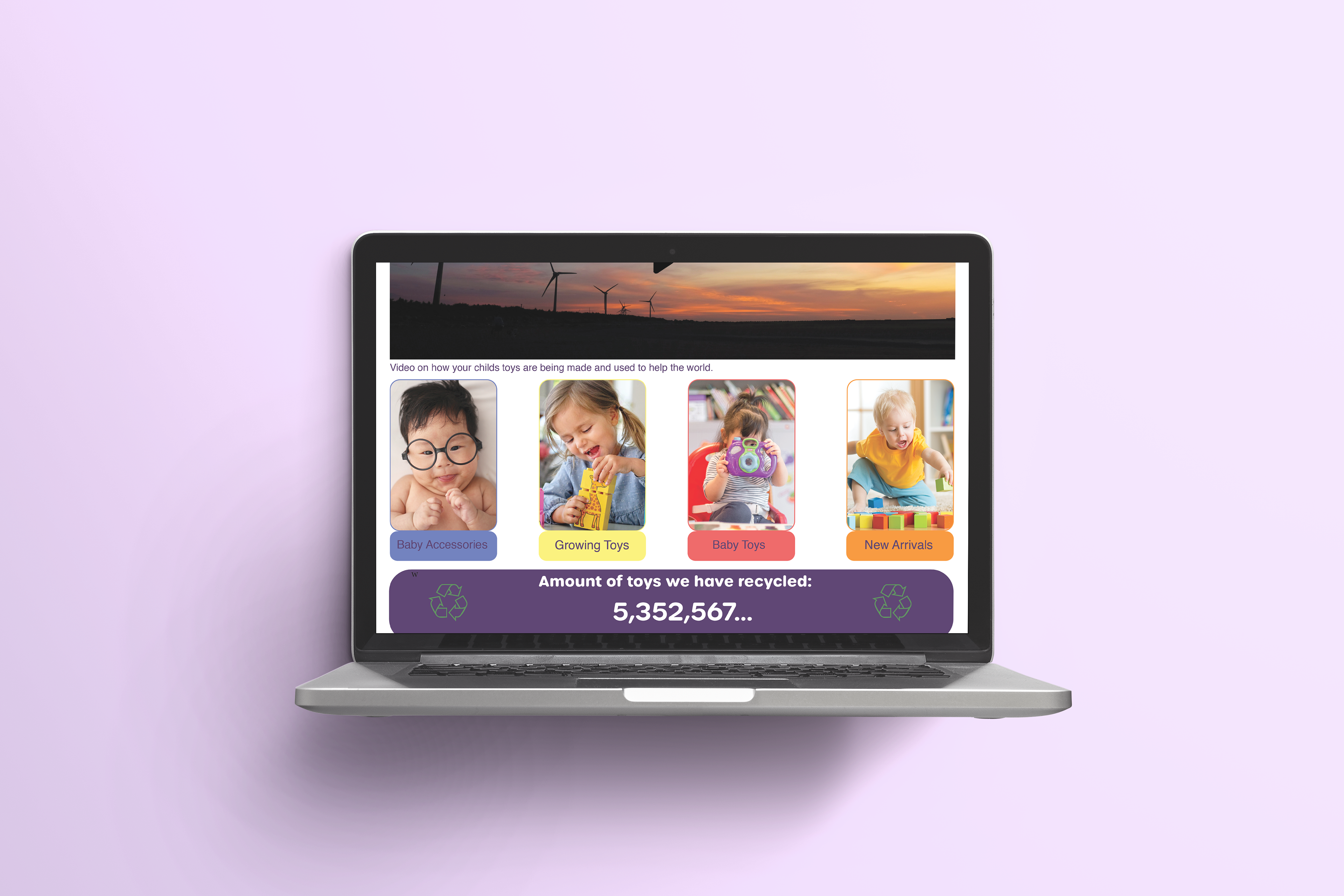
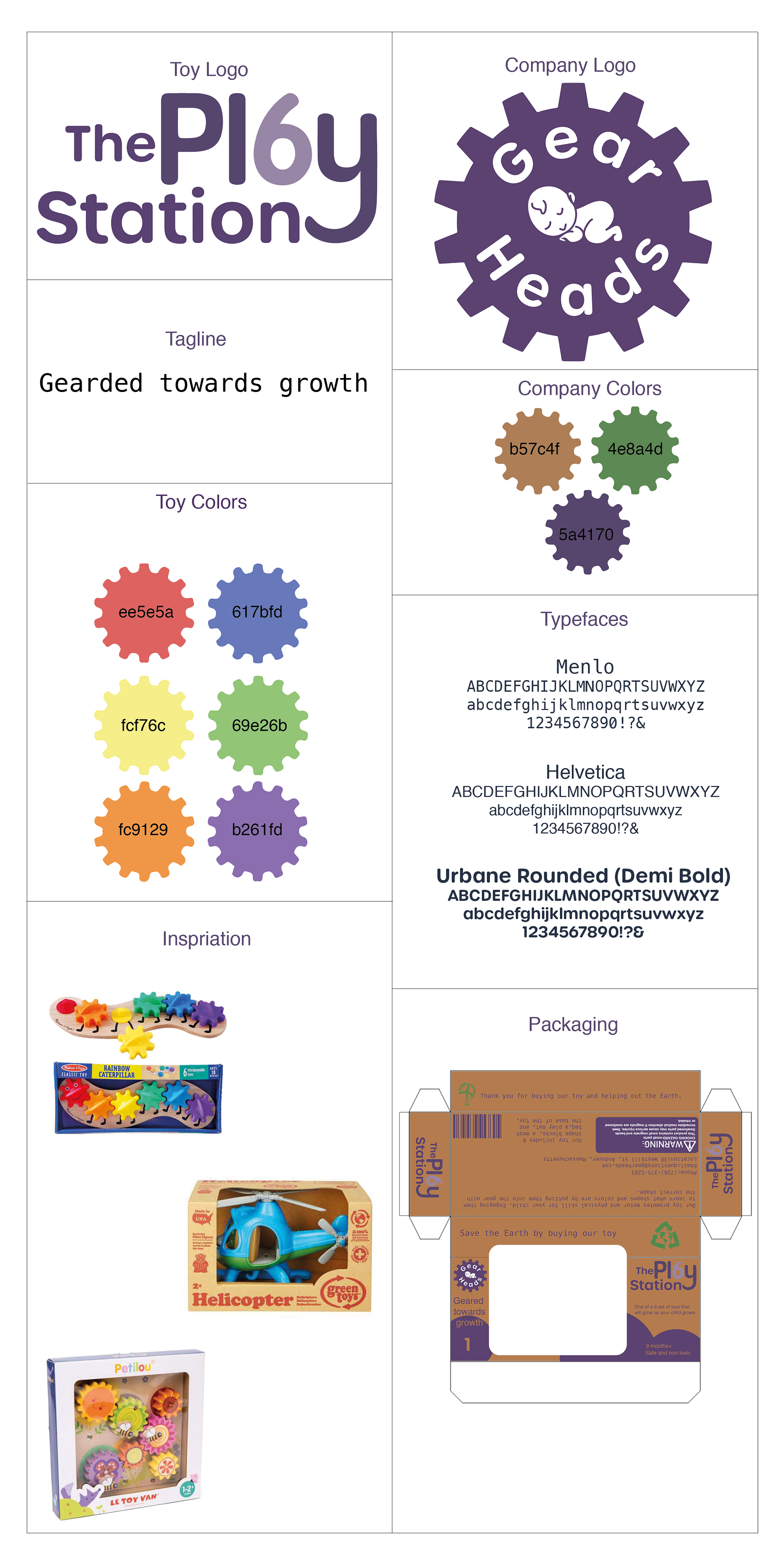
As the lead designer, I contributed to the development of the brand identity, including the company name, tagline, visual direction, and color palette. The education team ensured the product aligned with developmental learning standards, child safety guidelines, and age-appropriate visual considerations. The engineering team translated our concept into a functional prototype, resulting in a fully realized working model by the end of the semester.
This project provided valuable experience in cross disciplinary collaboration, problem solving, and the development of a product from concept to prototype within a team-based environment.

Process:
The process of this project presented several challenges, particularly due to its multidisciplinary structure and differing expectations across departments. At the beginning of the semester, our team worked to develop a toy concept that met the project guidelines and learning objectives. This included establishing the company name, product name, tagline, and overall visual identity, including color palette and branding direction.
As the project progressed, it became clear that each discipline was evaluated differently and contributed to the project in varying ways. As graphic design students, this project represented the primary focus of our coursework and accounted for a significant portion of our final grade. In contrast, education students contributed through research, article summaries, and feedback on developmental appropriateness, while mechanical engineering students focused on the technical development and construction of the prototype later in the semester.
Due to these differences in workload and timing, coordination between team members was occasionally challenging, particularly when expectations and levels of engagement were not fully aligned from the start. Midway through the project, our group also revisited the concept direction, which required careful reassessment of the work already completed and additional effort to maintain consistency and progress within the remaining timeline.
Despite these challenges, the team was ultimately able to realign and focus on completing the project effectively. Through collaboration and compromise, we were able to bring the concept from initial idea to a functioning prototype. Overall, the experience highlighted the complexities of cross disciplinary teamwork, communication, and project management in a real world design environment.